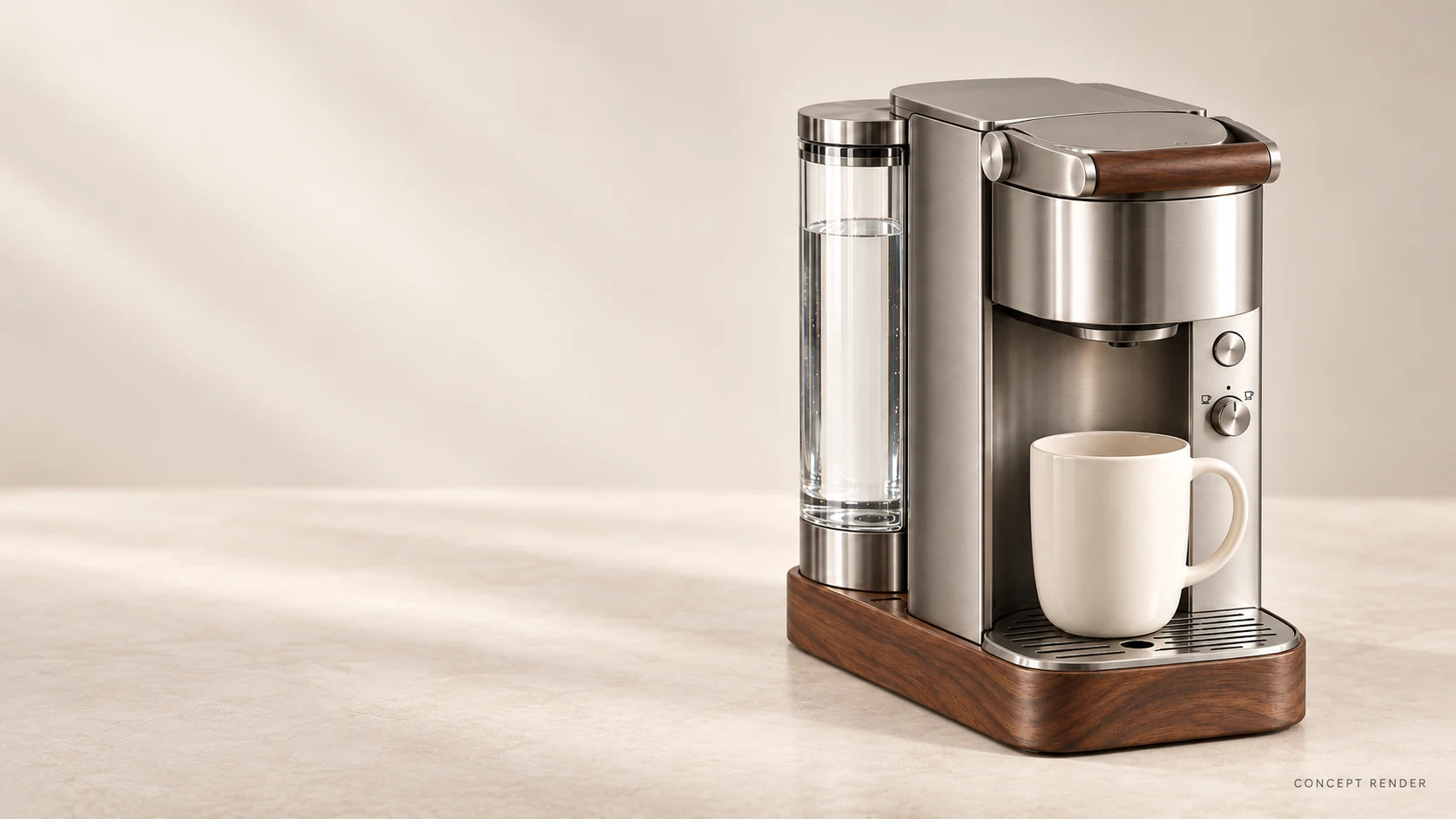
The PlasticFreeBrew machine concept
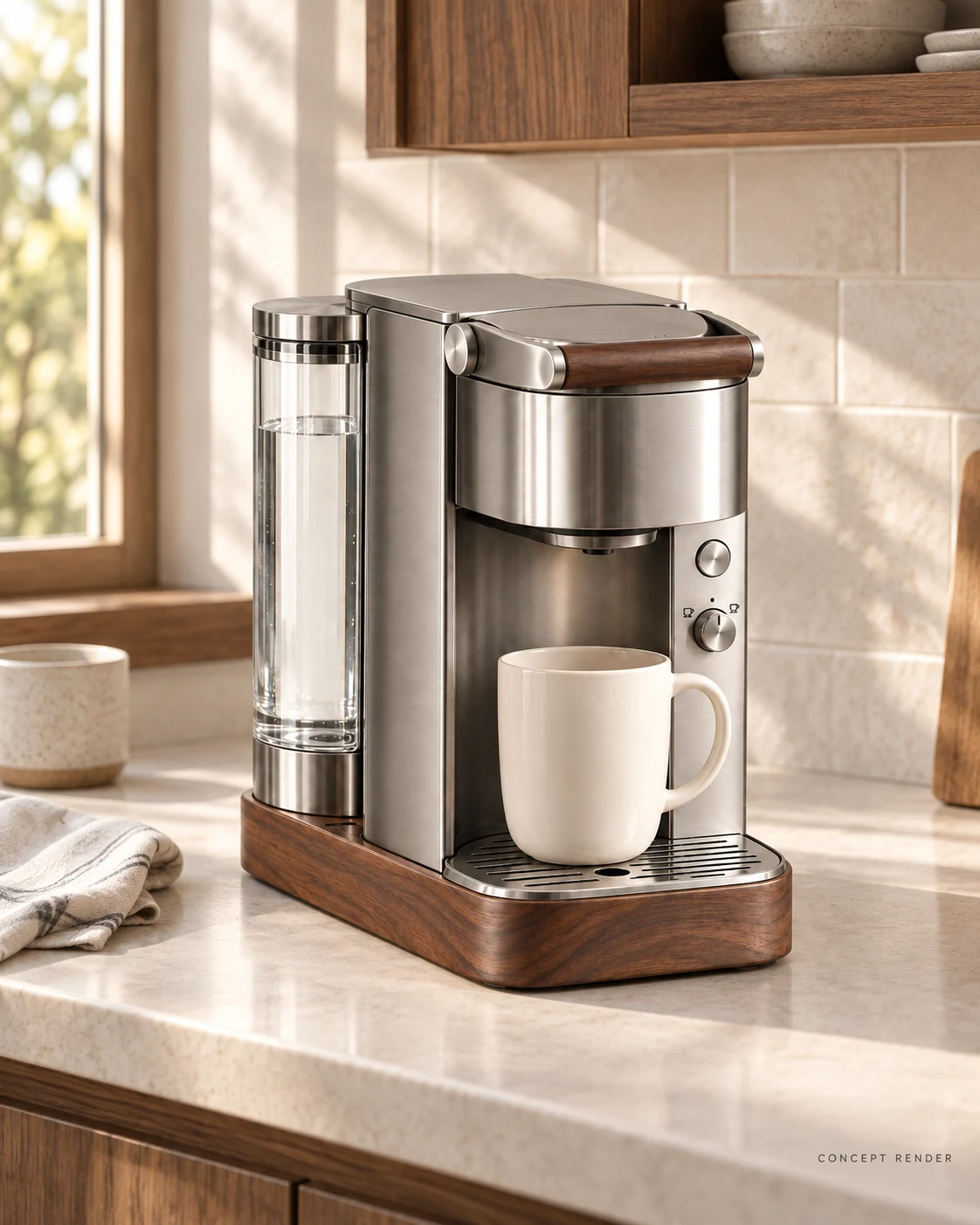
A plastic-free single-serve coffee maker, designed around PaperPods.
A familiar single-serve routine, reimagined around glass, stainless steel and PaperPods. Our vision for a brewer you would be happy to leave on the counter.
A design concept. Not yet a working prototype.
An idea with roots
The coffee is ready.
The brewer is the ambition.
PaperPods are already shipping: specialty coffee in a different kind of single-serve pod. They are the first product in our ambition to bring more care to your daily cup.
You can try PaperPods today in a compatible brewer. We are exploring a machine that could one day pair with them, and listening to the people who would want it in their kitchen.
A closer look
Good materials.
With a clear purpose.
Our goal is to remove rigid plastic from the machine’s water and coffee path. These illustrations make the proposed choices visible.
Inside the idea
What changes
Under the lid
Inside the idea
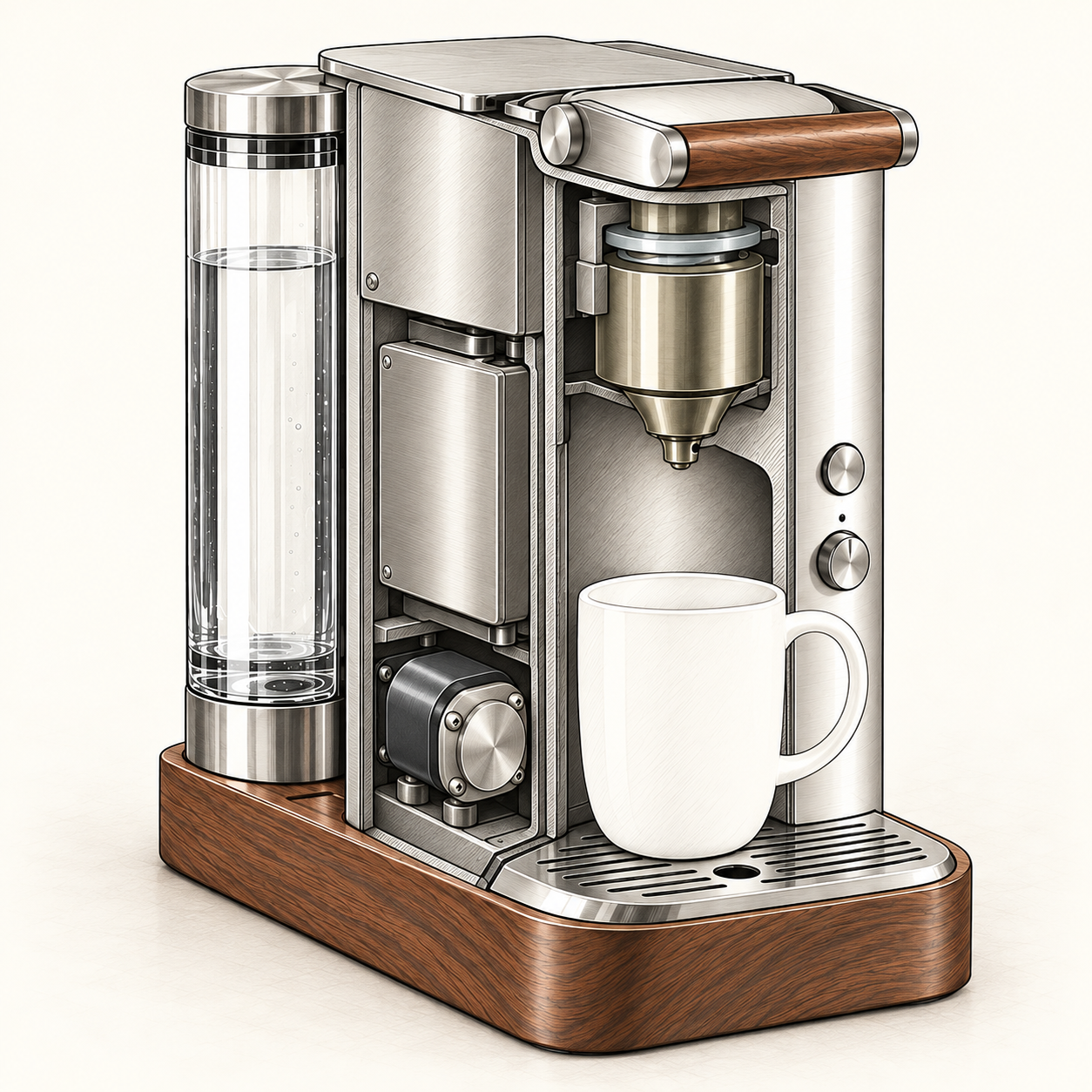
Inside the proposed brewer.
Four main components. One material direction to put to the test.
- Glass reservoirWater stored in glass.
- Cold-water pumpA replaceable silicone tube would carry water through the pump.
- Stainless steel heaterWater would heat inside a continuous steel tube.
- Steel brew assemblyProposed metal contact parts, with silicone where sealing requires it.
Proposed architecture. Subject to engineering validation.
Illustrative layout. Open the image to enlarge.
What changes
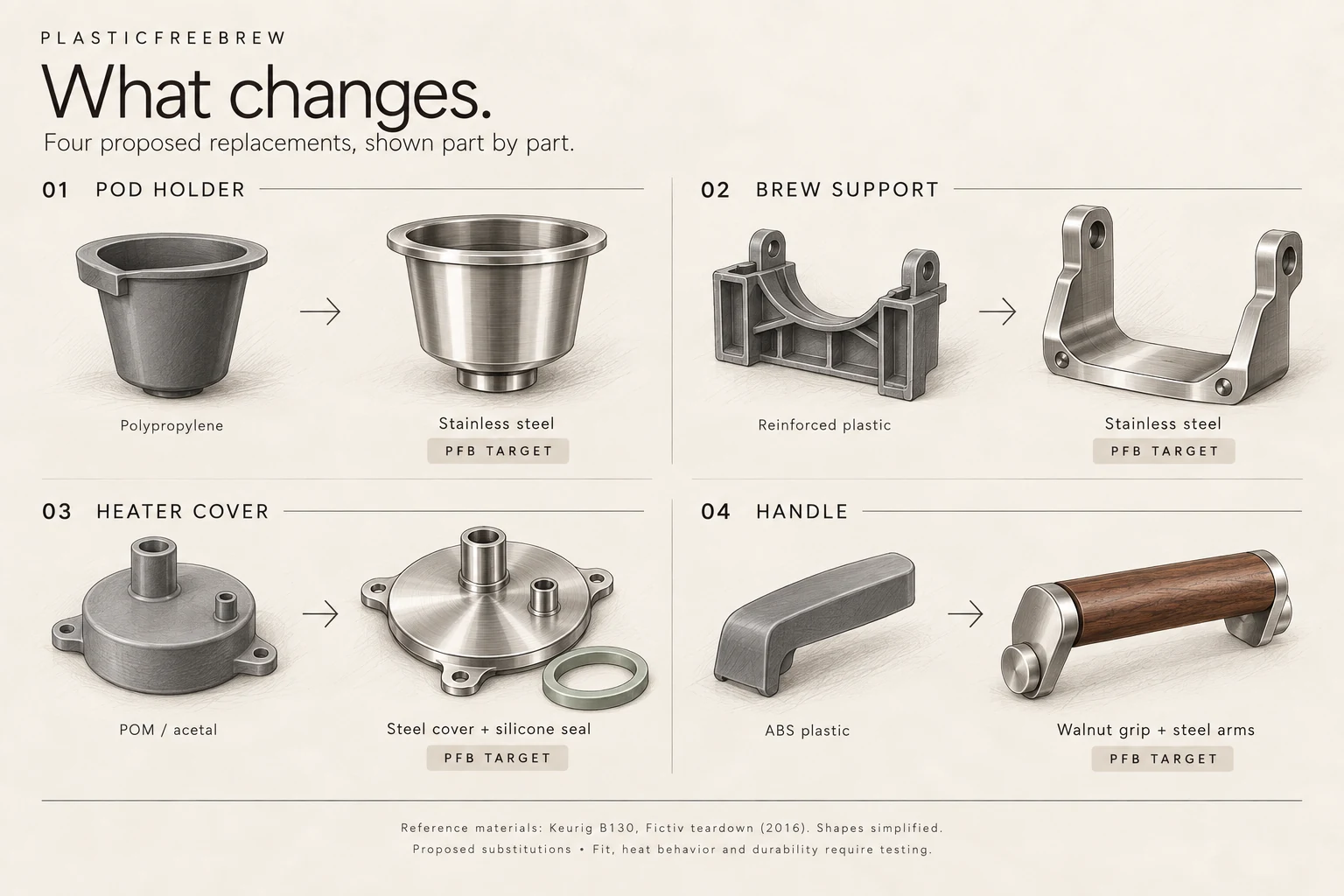
A considered choice, part by part.
These simplified comparisons show where rigid plastic components found in a reference brewer could give way to steel or external walnut. Each change still needs engineering and testing.
- Pod holder: proposed stainless steel
- Brew support: proposed steel structure
- Heater cover: steel with a silicone seal
- Handle: walnut grip on steel arms
Open the illustration to enlarge. Concept study, not an engineering drawing.
Under the lid
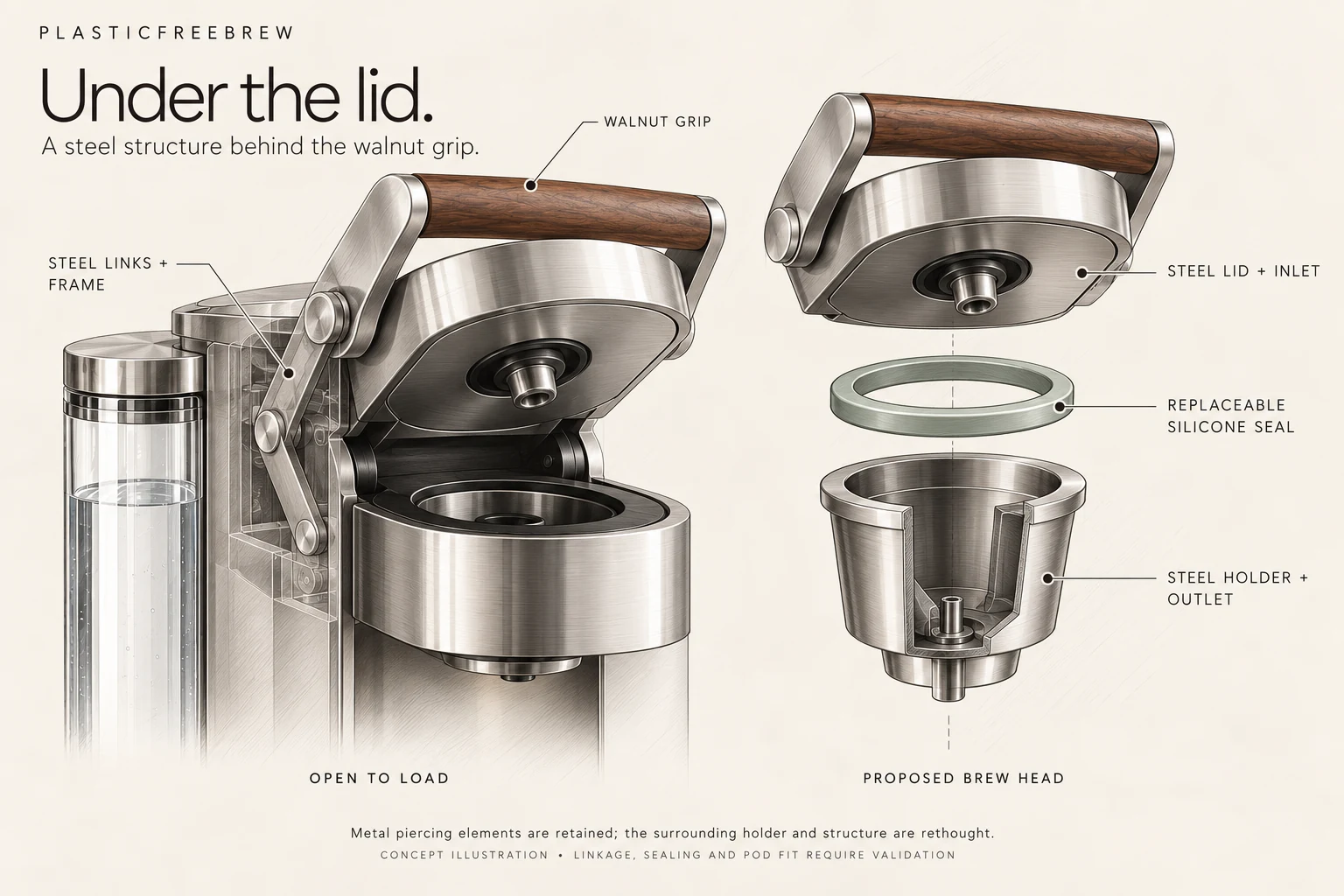
Familiar to open. Thoughtful underneath.
A short walnut grip connects to steel arms. The lid opens above a fixed lower pod receiver. The drawing explains the intended arrangement; it does not establish a working mechanism.
- Rear-hinged upper assembly
- Fixed lower pod receiver
- Steel frame takes the load
- Travel, clamping, and sealing to be validated
Open the illustration to enlarge. Concept study, not an engineering drawing.
The honest detail
Silicone is part of the proposed pumping tube, seals and flexible connections. It is a polymer. Exact pump, valve, sensor and fitting materials still need qualification. These are design intentions, not verified material or performance claims.
Made for the morning
A little more care.
The same
simple ritual.
Fill the glass reservoir. Unwrap a PaperPod. Lift the walnut grip, load the pod, close the lid, and brew.
That is the experience we’re working toward: coffee that fits into your day, in a machine that earns its place on your counter.
4–12 oz
Proposed cup sizes
48 oz
Target usable reservoir capacity
A real dial
Tactile, straightforward controls
No required app
A coffee-first experience
Proposed targets, not measured specifications. Removable cleaning parts and serviceability are also part of the design brief.
Before your next cup
A few good
questions.
A clear view of where the idea stands today.
Not yet. This is a design concept, and there is no working prototype, confirmed price, or launch date. We are gathering interest and connecting with people who could help take it further. Signing up is not a reservation or an order.
The concept is intended for the familiar single-serve pod format, with PaperPods at the center of the experience. Fit, brewing performance, and compatibility all need physical testing. A conventional plastic capsule would still introduce its own plastic, regardless of the machine’s materials.
Our design goal is to remove rigid plastic from the water and coffee path using glass and stainless steel. Food-contact silicone may still be needed for seals and flexible connections; silicone is a polymer. We have a proposed architecture. Exact pump, valve, metering and fitting materials still need qualification. Electronics and wiring sit outside this material goal. We are not claiming that the entire machine is plastic-free.
Walnut gives the external grip and base a warm, tactile character. It is intended as dry exterior trim, with steel carrying mechanical loads and a steel tray managing drips. Heat, moisture, cleaning, and durability still need to be tested.
We would like to meet appliance companies and people with engineering, food-contact materials, manufacturing or relevant commercial experience. Co-branded development is one possibility. Visit our partnership form to introduce yourself.
For your future countertop
Could this be
your next brewer?
If you would like a machine like this, let us know. Your interest helps us understand demand as we explore the right manufacturing partnership.
We’ll share meaningful milestones when there is something worth sharing.
Machine interest
Register your interest.
Start with your email. After signup, you can answer three optional questions about your coffee routine.
No payment, preorder or commitment. Buying PaperPods is optional.
For manufacturers and collaborators
Bring your expertise to the table.
PaperPods are already here. Now we are exploring a brewer designed around them. We bring the coffee product, the brand and a clear vision for single-serve brewing.
We would like to meet an appliance company that could help develop, manufacture and support it. Co-branded possibilities are welcome, alongside engineering, materials and relevant commercial expertise.
Machine visuals depict a concept. Design research: Brewer patent · Reference teardown
Reference components vary by brewer. Needles in the reference brewer are already metal. This independent concept is not affiliated with or endorsed by Keurig.